
WHAT KIND OF LEADER ARE YOU?

A leader comes in many shapes and sizes. Knowing which one you are can help you lead better. There are commonly 8 leadership styles – we explore these: 8 LEADERSHIP STYLES 1. Transformational Leader Innovation and change is a big part of this leadership style. These leaders want to encourage growth and ideas within their followers. 2. Democratic Leader This leader wants to bring in their sheep to participate. They are open to “the more the merrier” and believe that strength and growth come in numbers. They are very team led. 3. Bureaucratic Leader ‘By the book’ is a phrase that resonates with this type of leader. They want to follow a set of rules and do it right. They are not very forgiving when the rules are bent or broken. They believe that everything and everyone belongs in a box and that this is what works best. 4. Transactional Leader With this leader, they will give but they do expect something in return. There will always be a transaction or trade taking place here. 5. Servant Leader Some may get confused whether this person is a leader at all, as they always seem to be doing things themselves. But, their belief is that if they serve, the rest will follow in likeness. 6. Autocratic Leader The opposite of the democratic leader – they want it all to go their way. The term, ‘my way or the highway’ comes to mind here. 7. Hands-off Leader With an attitude that people are more capable when they are left to do things their way, this leader is very much a hands-off type of person. They give their followers the tools and then oversee that all is going according to plan. 8. Charismatic Leader You know this type well and their qualities are often resident in most styles of leadership. But, this character leads by magnetism. People just want to do whatever they say because they are that charismatic. You will know where you fit in and for some styles, there is always some improvement needed. Get in touch at https://westcoastpersonnel.co.za/find-staff/. Follow us on Facebook to keep up to date.
HAPPY YOU – HAPPY WORK – MAKE THE MOST OF WORK LIFE

No way around it – you have to work, and for a good part of your life, and mostly this will be for someone else. So, you may as well make the most of it, and be happy! Easier said than done, especially if you are not working in a job that you like, if what you’re doing is not your passion, and if the conditions are not good. But, it really does come down to attitude and perception. What do we mean? The way that you look at something and the way you perceive it can change your mind about it 100%. Finding the meaning and value in every task, every action and every moment, can release you from the chains of negativity and unhappiness. This doesn’t only apply to work but in life in general. But, let’s start with work, as you will be spending most of your adult life here. First, ask yourself why you are there. It could be a means to an end i.e. pay the bills, ensure your family doesn’t suffer, or you’re studying and need a job. Or maybe its a stepping stone in your career path. Those reasons, whatever they may be, should be a motivation for you to move through your workday with easier steps. Then look at each and every task you take on. What meaning can you find in the task itself? Sure, it may not add value to you directly, at that moment, but the task is a stepping stone in a bigger pond. The business you work for needs that task to be done and to be done well in order to complete a puzzle. Your input is part of that puzzle building, and in the end, fulfilling an integral need the business has. You are an important element in that project. Getting that will help you on your way to happy. You need to look at the job at hand, and even if someone else could do that job, you have to do it so well, that you know no one could have done it better. In that way, you have put yourself at the top of the food chain. You have become indispensable to the company when you offer value, even if it is through a mundane and boring task. Your input can also have positive repercussions that will affect other people in the business. Most activities are part of a team effort even if you never deal with the other people. There is rarely an activity that requires only one single input. Writing an order needs to then go to the person that will place the order, then to the one that will pick the order, check it and on to delivery. Mundane as it may be, you are all cogs in a working machine. Are you going to be the happy part of this process? Attending a meeting where you feel inadequate and useless could be because you are not adding value. Before the meeting, think about how you can add value. What can you bring to the table? How can you leave the room afterwards having them wonder where that came from and when will they see more? You can be your own worst enemy and making a difference is always up to you. There is always a bigger picture. Find that bigger picture and know that all the smaller paint swipes are just to build up to the finished artwork. Follow us on Facebook to keep up to date with news.
I NOW PRONOUNCE YOU EMPLOYER AND EMPLOYEE – Interviews vs. Dating

While you may be thinking that sounds seriously odd, preparing and going on a date has many similarities with preparing and going for an interview. Besides the nerves and excitement, there are many other areas that marry up (excuse the pun). Let’s break it down … WHAT TO WEAR? Yip, making sure you are dressed appropriately is important for both scenarios. Where are you going? When relating to a date, is translated to Who are you seeing? and Who is the company? All these answers will get you to the correct attire. BE ON TIME It is never wise, no matter whether its a date or an interview, to be late. In fact, be early, at least by 10 minutes. Not only does this take the stress out of getting there on time, but you also have a chance to suss out the surroundings, the people, and to assume your position of power. And, by that we mean, get into a space where you feel comfortable and confident. WOULD I LIE TO YOU? Well, hopefully you won’t. Lying never got anyone anywhere – okay – so that isn’t so true, – but in the end, it can come back to bite you. So, opt for truth vs. lies – honesty really is the best policy on both accounts. WHO ARE YOU? And, what we mean her is, who are you seeing? Do a little research. Sure, with dating, this means a bit of stalking, but isn’t that what the wonderful world of social media is for? Duh! No, seriously, research the company and person who is interviewing you. LinkedIn is great to find out all the ins and outs. BE FRIENDLY Whilst in the throws of your date … um sorry, interview, be nice. Ask questions. Smile. Be engaging and of course, be friendly. HURRY UP AND WAIT With that period after the interview, you want to wait a little before haggling the interviewer as to what their decision has been. Likewise, with a date, you don’t want to be running after them too much. Okay, there is merit in making contact the next day, but sometimes, the 3 day wait is beneficial. Again, in both situations. KNOW WHEN TO SAY YES Often times, you may not be completely sold on the idea of someone or in the case of an interview, on the company. You may not feel that their company culture fits you and you are not sure of the future prospects within the role. Weighing up all the pros and cons is important and sometimes, you have to give a little. (sounding familiar? (clears throat) You know, relationship stuff 101) It may never be the perfect match, but if you’re not getting the nod, you may want to consider going for it. You can always negotiate. Feeling ready for that date … interview?
TEAM COLLABORATION – HOW TO GET THE RIGHT MIX

Building a team is much like building a marriage, well a marriage of a few people, that is. Team collaboration is key! While we are not condoning polygamy marriages or dissuading them, it makes one think that to make that work, there has to be great teamwork. Everyone has a part to play, and everyone has to see the other person’s part as just as important as theirs. How can you ensure your team works as one unit? CHEMISTRY There has to be a certain element of chemistry between all the parties, otherwise the collaboration will be a flat and lifeless entity. Sure, there is a game plan in place, each has a job to do, each knows the ideal outcome, but we are all human, and working together isn’t always easy. We are so different. But, if there is a something that connects us, drives us and a chemistry that links us, then you have a great team. Ensure you put a team together that has chemistry. You need to sit back and analyse whether they do. It takes time and experience, but its possible to see. COMPANY VALUES It should always come back to what your company values are. If there is a team member that doesn’t fit well into your mix of values and culture, then they shouldn’t be there. This should be made clear from the onset. GET OUT Putting people into situations that are generally outside of their comfort zone can help you to assess what their real and true self is. Organise an outside activity that involves a team aspect. Get them interacting with each other and solving problems. Observe. Don’t get involved, just observe. Then ask them questions as to how they found the experience. Dependent on their answers and what you see, you should be able to ascertain whether this collaboration fit together or not. CHECK IN There may not be a 100% perfect team out there, and sometimes it can take a little time, with a little effort, for a few people to get on and work together. You have to be able to see the potential in each and as a whole. Keep checking in. Keep testing them, asking questions, and taking a vested interest in what their concerns may be. If its a creative collaboration team, you will find a lot of passion, which is typical of creatives. So, when they are all together, it can become quite a heightened and electric situation, but in saying that, this can be what makes them a great team too. See that. Nurture that and help them work towards the greater good.
5 FAB COMPANY CULTURE ELEMENTS

Company Culture – the buzz word of the decade! But, what does it mean and why should you be focusing on it? If you take only one thing from this then know that a hostile, negative environment is not a good place to be. Developing a company culture needs to address that, first and foremost. However, in creating a company culture, you need to also look at your, the owners, personal values. If you haven’t already gone through this exercise, I suggest you do this first. List what you consider your top 5 values in life and convert those into working values for your business. There are obvious ones, that should be … well … obvious, such as integrity, honesty, ethics, but you can dig deeper and find others that speak to your unique value system. 5 Elements that you need to ensure you apply, once you have your company culture values intact, are: 1. Be upfront about what your company culture is about – right at hiring stage Employing the people that fit your company ways is vital to sustaining good staff. You can ask certain questions that will let you see just whether they mix well with you, your business and the other already established employees. 2. Let existing employees know what the company culture is all about Maybe you have worked about-face and only now decided what it is your company values are. Well, don’t leave your workers in the dark. Tell them, make it clear, and even consider visualizing it on your entrance wall or as a screen saver on their computers. 3. Let your team know that they are a team Many businesses exist in an island scenario, with management sitting so far away from the rest of the people, that they cannot bridge the gap. And, we don’t mean literally only here. We mean in terms of actually connecting and engaging with staff. If they feel isolated, then they wont do justice to your business and they certainly won’t stick around long. 4. Be the voice You cannot expect others to follow a methodology you have instilled when you don’t live it. If you want openmindness, then you need to show you are openminded. If you insist that there be a casual, you-can-talk-to-me-about-anyting attitude, then don’t be slamming doors in your staff’s face. Live by what you profess are your company values. 5. Communicate it over and over again Make your company culture an integral part of everything you do, and bring it into meetings, projects, client liaisons, and all that your business gets involved in. Reiterate the values whenever you get the chance, lest anyone forget them.
HOW TO BE A BETTER MENTOR

We all are mentors to someone, whether we realise it or not. Ensuring you keep your mentor skills honed is important so that you can give of your best to others. Whether it be your child, your employees, your colleagues, or a friend, you want to know that the way you mentor them brings on results. LISTEN Having two ears and one mouth may be just the way we were created for aesthetic appeal, but using them accordingly is also a good idea when it comes to mentoring. Listen to what your prodigy is saying, where the issues are, why they are needing your assistance, and then before giving them your insights, collate a proper detailed response. SET EXPECTATIONS Having a goal or goals to aspire to is helpful for you as the mentor and of course helpful to the mentee. Have the mentee write them down and constantly go back to them to gauge how far they are nearing them. CHECK IN – OFTEN While this may not be your full time job, as a mentor you want to be checking in with your student (as that is what they are) on a regular basis. See whether they are on the right path according to those goals. Send a quick message. Make a phone call. Or even pop them an email. Being available is also another way to help them. LEARN HOW TO BE EMOTIONALLY TUNED IN The art of empathy does not come naturally to most, so learning to understand others situations and feelings is a great tool to have. One mustn’t get too involved though, so stepping back and assessing the level of interaction can help the mentee. NEVER ASSUME Always ask. No matter what you think or have an opinion on, always ask your student first. Assuming something can be the undoing of months of mentoring. Once you have all the information, then you can devise a plan to moving forward. BE HUMAN No one expects you to be perfect, and in fact, its best that you are not. Showing that you have made mistakes and aren’t infallible, will put you in good light with your mentee. Open up and let them know that you can relate.
AI, COMMUNITY PLATFORMS AND TECH GIANTS
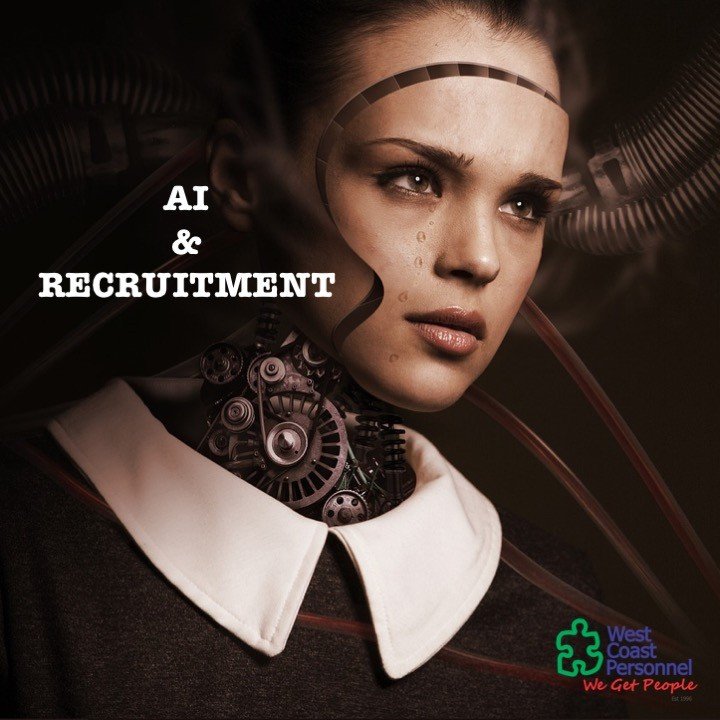
AI, Community Platforms and Tech Giants, these are hot topics currently alive in HR and Recruitment, but are we really understanding how the game will change once these products go to market? AI and recruitment, as a mix, are not far off from our future. I recently attended a IBM Conference where I got some first-hand insight on AI, and other interesting products already in the market. With a smart Development team, you could basically have a system that takes/ receives specs or even generated well developed specs for you and place adverts on all job boards, especially on social media. In addition, this new system can shortlist candidates, tests candidates, personality profile candidates, choose the best option, negotiate the terms of the contract and salary, get the contract signed, and learn all your staff’s functions by monitoring everything they type, say, watch and do. The core key AI that will apply, is to learn your function, spot weaknesses and train you, learn strengths and share them with peers and basically develop super HR staff and eventually do their jobs better than them. AI includes factors such as emotions and feelings. It will be faster and will process data faster than that of a human. IBM already has these products available and with a smart Development team. You can put together a highly intelligent and smooth functioning solution to make it your own. Microsoft has just made it clear why they were so determined to beat Salesforce in the battle to acquire LinkedIn. Microsoft’s partnership with LinkedIn will see them launching a similar and intriguing system to utilise skills, anywhere in the world, at any time. Developing products like their very powerful CRM, LinkedIn Data base, AI and bots, they seem to be putting together a game changer. Microsoft pretty much has access to a 500 million-strong workforce to tap into. Not only can you find the best person for the jobs, based on LinkedIn testimonials and more, you can order them for the job and add it to their schedule. HoloLens might just offer the solution with someone around with good enough skills to be guided through the job. LinkedIn + HoloLens = Microsoft being able to make that happen for you. Microsoft has a colourful history with chatbots. In 2016 it launched a chatbot that turned into a genocidal racist, and another year later they called Windows 10 “spyware”. They seem to be getting chatbot’s right and I am sure a lot of the communication of the future on social sites will be with chatbots. It has been speculated that the giant Tech companies have their eyes on the other big platforms. It is not just a HR/Recruitment Solution. These sites plugged into the correct CRM with the correct AI and chat bots can and more likely will change the consumer market as we know it. The race is on. If you think I am talking the future, you are mistaken. All the newly developed tech is already present and companies like Microsoft are putting the dots together. Are HR departments and staff at risk? Is the recruitment industry at risk? What do you think?
DISMISSALS – A FEW WAYS TO HANDLE

Let this be clear. This cannot not be used as a tactic to get rid of employees. With handling dismissals, there are procedures to follow and they need to be fair. There needs to be actual poor work performance, incompatibility or ill health, to be able to start the negotiations for employment at a lower salary, a more junior role in the organization or to dismiss them based on incapacity. The employer must ascertain whether the employee is capable of performing the work that he was employed to do, and if not the extent to which he is unable to perform those duties. The employee is entitled to participate in this investigation, which may require further medical investigation, and the employee can also be asked to demonstrate his ability. Dismissal based on incapacity due to ill-health, incompatibility or poor work performance, depends on the question whether the employee can fairly be expected to continue in the employment relationship. One must bear in mind the interests of the employee, the employer and the equities of the case dismissal based on incapacity due to poor work performance. This needs to be documented, and the employee needs to receive guidance in the form of appraisal and training, if need be. Other factors to be considered when handling possible dismissals would include the nature and cause of the incapacity, the likelihood of recovery and improvement or recurrence. The period of absence and its effect on the employer’s operations must also be considered as well as the effect of the employee’s disability on other employees. If the employee’s duties cannot be adapted in such a way that the employee is able to fulfil those duties, and no alternative position is available, then dismissal may be justified. If the employee is offered a lower position and reduction in salary, then the lower salary will apply. Thus, it is obvious that the principles of procedural fairness and substantive fairness applies to such dismissals, as it applies to all types of dismissals. Should the employee not accept alternative employment at a lower salary the following factors need to be considered: When deciding whether a dismissal for incapacity was fair or not, the following must be considered: · whether the employee failed to work to a required standard · whether the employee was aware of the standards · whether the employee was given a fair chance to meet up to the standards · whether dismissal is the right punishment for failing to meet the standards Handling dismissals based on poor performance will only be fair if the employer: · has given the employee proper training, instructions, evaluation, guidance and advice · assessed the employees performance over a reasonable period of time · investigated the reasons for continued poor performance · investigated ways of solving the problem without resorting to dismissal · gave the worker a chance to be heard before deciding to dismiss Handling dismissals for (temporary/permanent) ill health or disability will only be fair if the employer: · investigated the degree and duration of the injury or incapacity · considered ways of avoiding dismissal, for example getting a temporary worker until the sick employee has recovered · tried to find alternative work for the employee to do · tried to adapt the work so that the employee could still do it · gave the employee a chance to be heard before deciding to dismiss How severely ill or disabled the worker is (degree of incapacity) and for how long he or she is likely to remain ill or disabled (duration of incapacity), as well as the reason for the incapacity, will be considered when deciding whether the dismissal is fair or not. More effort is expected of the employer if the employee was injured or became ill because of their job. Handling dismissals is a sensitive process and because the law is tight, one should approach a specialist if you are not sure.
WHY THE BOOLEAN SEARCH IS THE BOMB

What is Boolean Search? No, its not a weird, indie-style of searching the internet. Its, in fact, a brilliant and quite simple way of searching for possible candidates. By using a combination of a few main words (more on this later) and keywords, you can be assured of accurate results. What are these main words? · AND · OR · NOT Add to that these elements: · () · “” And, you have a powerful search method. So, in practice, you choose the keywords, such as receptionist, DTP Operator, Car Salesman, and add in one or more of these main words and symbols, and there you go. One can use these as often as you like and in various combos. This will save you a ton of time by literally filtering the results for you. Why AND? Say we take these two groups – RECRUITMENT / HR. We want to find people that have both of these words in their profile, and so using the Boolean string we type in: RECRUITMENT AND HR The system will now search for people who include the word “recruitment” and the word “HR” in their profile. This means we want to find candidates who are in the Venn diagram cross over, i.e. candidates who have both those keywords in their profile. By using the word AND in our search along with other keywords, we narrow our search, so we effectively will elimanite options that don’t suit our search criteria. Why OR? Sometimes a potential candidate may use words that are similar, such as RECRUITMENT / RECRUITING. Very similar but now by creating the Boolean string: RECRUITMENT OR RECRUITING the system will search for all people who have either of these words in their profile or even if they have used the words in a row in their profile. We are still looking for candidates who fall into the Venn Diagram cross over section, but with a different angle. By using OR we are now broadening our search, in stead of narrowing it. Why NOT? In order to eliminate a keyword, we would type in the Boolean string: RECRUITMENT NOT HR This way, the system will not look for HR. In effective, a candidate may have both words in their profile, but by using NOT in the search phrase, we eliminate that candidate, as we only want those with just RECRUITMENT in their profile. These are candidates who fall into the right wing side of the Venn Diagram. We are removing non-essential results and thereby narrow our search again. Why () Brackets? Computers are smart but we have to give them the correct instructions or the results will be warped and inaccurate. By using parentheses, we are then telling the computer what problem we want solved. Brackets play a big role here. Brackets give priority to a certain word or phrase. Example: We are to search for candidates that have the following words in their profile – TALENT – HR – RECRUITMENT But, I want to narrow it down further to or the computer will not know which of those words is the important one. We would type our search out like this: (talent OR hr) AND recruitment or talent OR (hr AND recruitment) thereby putting the emphasis on the words in brackets. Why “” Quotation Marks? Say you are searching for a particular vocation, but it consists of two words, example: Recruitment Specialist. Typing just: RECRUITMENT SPECIALIST will render a search that will have separateed the words, wasting your time. But, by putting the two words like this: “RECRUITMENT SPECIALIST” you have narrowed your search down, and now the system will search for those two words always together. Other examples would be: “INFORMATION TECHNOLOGY” or “ESTATE AGENT”. MORE EXAMPLES “HR Director” and (health or hospital) “Graphic Designer” and (DTP or cartoonist) Give the Boolean Search a try – it truly does work!
People Lie in Interviews

People lie in interviews. Fact! You’ve been looking to fill an important position in your business for months now, and after hundreds of resumes and dozens of interviews, you think you’ve finally found the perfect candidate. Their skills and experience are exactly what you’re looking for. He has got a great attitude and your team loves him. But are they maybe really too good to be true? People aren’t always the most truthful in interviews. When you really want to land the job, it can be easy to exaggerate, or stretch the truth a little bit. You’re in the hot seat and the pressure is on. People lie in interviews and say that they are very hardworking and never fail to always give exceptional work. This is so that they give the impression that they are perfectionists and never disappoint those who expect so much of them. Its estimated 38 percent of people have embellished their job responsibilities on a resume. So, rather contact prior employers (not just references) and get as many details as you can about the candidate’s job duties and descriptions. If employers won’t or can’t provide these, try tapping into LinkedIn to see if the candidate’s description of his or her past roles matches what’s on the resume. Candidates mislead you with current salary and salary expectations. Ask them for their last 3 pay slips and then decide on a reasonable increase. If the expectation is more than a 20% increase on current package, start asking questions like “what extra value are you bringing or offering to justify the increase been above market rate?”. Those who have leadership skills are always willing to try and salvage a problematic situation or they do their best to take control when things go wrong. That is why a big lie, which many people tell is that they say that they have exceptional leadership skills, even when they do not. People lie in interviews about their reasons for leaving. It is important you ask referees why they resigned. Its estimated 12 percent of candidates lie about dates of employment to cover gaps. You can contact previous employers to confirm dates. We also use the credit check to confirm dates. The credit checks we do list employment and employment dates. If someone omits a previous employer we also pick it up here. Companies believe that working in groups yields the best result and that is why so many people feel compelled to tell this big lie. At the extreme, candidates may purchase diplomas from online or falsify documentation by adding their names to a friend’s qualifications or even claim certification from people with the same name and surname as them. We check qualifications through a service provider, using the ID number matched to the qualification code to make sure it is the correct person. Candidates often say they are prepared to travel or relocate under pressure, but change their mind the next day. Relocation and commuting is a big issue and the candidate should have time to think and consider if the travel is manageable and realistic. Nowadays all employees are expected to be people-friendly, simply because they interact with a lot of clients. Keeping clients happy is one of the major task of employees and if employees are not approachable, they sooner than later will prove to be a real liability to the company. This is another big lie which many candidates tell during the interview, because they know that this is an ability which is truly sought after. Besides that people lie in interviews, there are many people who have the habit of gossiping. Such individuals just wait for an opportunity to talk ill of others and to spread vile rumors. Indulging in such gossip is very immature and childish, however sadly it is something which almost all of us take part in. This is certainly one of the biggest lies which people state in the course of the interview just so that the concerned recruiter gets the impression that the individual is someone who is mature and not interested in petty things such as gossip. On my social media history, you won’t find any racist, inflammatory, sexist or controversial remarks. Yeah, right! Millennials are quickly realizing that those offensive tweets they sent a couple of years ago or that rant they posted on Facebook about their ex-boss just last week, are coming to bite them in the butt. Check their social media profiles, the FB, LinkedIn, Twitter, Instagram, and other platforms. Everyone should conduct at least a five-minute research on the company to get a rudimentary grasp of the business, history, mission statement and so on. The interviewer will likely ask a follow-up question to ensure you actually did find out more about the firm. If you want to get away with the lie the best thing to do is to ask generic questions or say “I couldn’t find any information on (fill in the blank). Could you explain more?