
SLOW RECRUITMENT PROCESSES LOSE HOT PROSPECTS

I just had a client request a meeting with a star candidate I recommended to them four weeks ago and low and behold I had to let them know that the candidate had started work with an opposition company a week ago. WHY? Slow recruitment processes! This is not a once off. It occurs at least twice a week. I am sure that all HR and Recruitment Consultants who hunt top talent have experienced this. I understand that big companies often have more red tape and recruitment processes to follow. I also understand that it is difficult to get panels together and difficult to get signatures of authorisation for interviewing candidates, but at what price? There is a war for talent and if you don’t re-look your selection process you will not get the top 5% of candidates in your industry, but rather candidates who are available and definitely not the best for the business. Top talent has at least 3 offers or interviews in recruitment processes. They are being hunted daily and when they make the decision to move companies, they do have options. It is no longer a market where candidates are desperate and will wait 3-4 weeks for an interview. Skill shortages is not just a South African issue, it’s global and yes, we are losing the war. The root of unemployment is not only a lack of jobs, but a key underlying issue is also the inadequately educated workforce. Companies who understand that top talent do not stay looking for work for long, have a distinct advantage. Those companies who have tailored their recruitment processes to see top talent quickly, are those companies who are beating you to the candidates. Many firms now go the first step and track some variation of the “time-to-fill” metric. But despite that metric, not only are firms still almost universally guilty of painfully slow hiring but to compound the problem, few recruiting leaders truly understand the many negative recruitment processes that impact and result from slow hiring process timeline. I estimate that the impact at most corporations exceeds tens of millions of rand’s each year and the rand loss from this factor may be as much as 10 times higher than losses resulting from low recruiting efficiency related to the more popular “cost-per-hire” metric. It’s not enough to be conscious and aware of slow hiring. Identify and then quantify in rands each of the negative impacts of slow hiring, so that everyone from the CEO down will support the streamlining of the recruitment process. A big misconception that needs to be addressed is the old-fashioned way of thinking is that a slow recruitment process improves the quality of those you hire. You will lose most of the candidates who are in high demand during the late stages of your recruitment process. You also will lose significant revenue and productivity because vacant positions are open for too many days and essentially you end up paying new hires more in salary because they will be bid on by opposition. Your image of being slow decision-makers will cause you to lose many top prospects. Recruiting is a lot like acquiring a Grade 12 dance date. If you wait 40 days to make a selective decision, you must realise how relatively “ugly” your new hire is likely to be! Connect with us should you need help in moving swifter in your recruitment process.
WHY IS THERE A BATTLE FOR TALENT?

Skill shortages are not just a South African issue, it’s global and yes, we are losing the war trying to find talent. South Africa’s unemployment rate rose to 27.5% in the third quarter of 2018 from 27.2% in the second quarter. There were 6.2 million jobless people in Q3/2018; about 100 000 more than in Q2/2018. The unemployment rate is 37.3%, including people who have stopped actively looking for work. The issue is that most of these unemployed people are part of the inadequately educated workforce. Many students currently enrolled in South Africa’s tertiary institutions are studying subjects that do not support the need in business for science, technology, engineering and maths (STEM) as well as future-orientated skills. The unemployment rate in South Africa remains one of the highest in the world, yet over the past year it has become more difficult to fill positions, with the demand for Engineers, IT staff, and skilled Trade-Workers at its highest. South Africa has a shortfall of about 40 000 qualified artisans. While government has started to actively encourage young South Africans to choose trade jobs, they’re also filling skills gaps in the trade with professionals from abroad. Survey shows skilled trades remain in the top three most difficult positions for companies to fill, followed by engineers. Pertaining to IT, actual coding experience can become more valuable than traditional qualifications. After all, you learn through working and sometimes traditional education simply can’t prepare you for the world of work. In a world of fast-paced technological advancement, more and more IT skills are needed to keep up with the demands of a changing global marketplace. In South Africa, in particular, there is a lot of discussion around the lack of IT skills in the local job market. As skill needs change rapidly employers are looking inside their organisations for solutions, with more than half choosing to develop and train their own people. Production and machine operators also become tougher roles to fill. As the talent shortage escalates, employability not only depends now on what you know, but on your ability to learn, apply and adapt to the constantly evolving business landscape. Is paying higher salaries the answer? Companies have budgets and need to remain profitable, getting into a salary war with competitors could prove counterproductive. Building the right talent for Africa’s jobs of today and tomorrow is therefore critical.
SOCIAL MEDIA – THE ADDICTION VS THE BENEFIT

Every business should utilize social media in some capacity, but where do you draw the line? We’re all guilty of loving our phones or computers a little too much, right? I feel a constant compulsion to check my email, text messages and social media feeds throughout the day. I use FB, LinkedIn, Twitter and Instagram to recruit and head hunt good people and personally find it difficult to always be disciplined and stick to recruiting when on these platforms. Keeping in touch with prospects on social platforms is no easy task. I could be having up to 40 conversations at any given time across several platforms. The main advantage of social media is connectivity. People from anywhere can connect with anyone, regardless of their location. Now that we’re connected wherever we go, we don’t have to rely on our landlines, answering machines or snail mail, to contact someone. You can share your issues with the community to get help and guidelines. Just like it can tarnish the reputation of any business, it can also improve business sales and reputation. Being able to post and share things on social media gives us a feeling of purpose and a means to feel connected with those around us. Having a LinkedIn profile and social presence can connect you to employers and business contacts in every field. However, I do feel that there needs to be a line drawn between social media for personal use and social media for business use. If it’s not utilised for business, social media should be restricted to during breaks and after hours. Between 60 and 80 percent of people admit that they don’t go online for anything necessary, but rather to kill time or to be entertained. This is taking time away from valuable working hours. One of the disadvantages is the possibility of the company network being exposed to malware. Allowing employees to access social media platforms at work makes your organisation more vulnerable to potential breaches in confidentiality, or the possibility of a tarnished image. With so many people currently on social media; tweeting links, posting selfies and sharing YouTube videos, it sure can get quite noisy. Becoming overwhelmed by too many Facebook friends to keep up with or Instagram photos to browse through, isn’t all that uncommon. Over time, we tend to rack up a lot of friends and followers, which can lead to a lot of bloated news feeds with too much content that we’re not all that interested in. Since social networking is all done on some sort of computer or mobile device, it can sometimes promote too much sitting down in one spot for too long. Likewise, staring into the artificial light from a computer or phone screen at night can negatively affect your ability to get a proper nights’ sleep. If you find that social media negatively impacts aspects of your life, like work, it’s a problem.
TEAM COLLABORATION – HOW TO GET THE RIGHT MIX

Building a team is much like building a marriage, well a marriage of a few people, that is. Team collaboration is key! While we are not condoning polygamy marriages or dissuading them, it makes one think that to make that work, there has to be great teamwork. Everyone has a part to play, and everyone has to see the other person’s part as just as important as theirs. How can you ensure your team works as one unit? CHEMISTRY There has to be a certain element of chemistry between all the parties, otherwise the collaboration will be a flat and lifeless entity. Sure, there is a game plan in place, each has a job to do, each knows the ideal outcome, but we are all human, and working together isn’t always easy. We are so different. But, if there is a something that connects us, drives us and a chemistry that links us, then you have a great team. Ensure you put a team together that has chemistry. You need to sit back and analyse whether they do. It takes time and experience, but its possible to see. COMPANY VALUES It should always come back to what your company values are. If there is a team member that doesn’t fit well into your mix of values and culture, then they shouldn’t be there. This should be made clear from the onset. GET OUT Putting people into situations that are generally outside of their comfort zone can help you to assess what their real and true self is. Organise an outside activity that involves a team aspect. Get them interacting with each other and solving problems. Observe. Don’t get involved, just observe. Then ask them questions as to how they found the experience. Dependent on their answers and what you see, you should be able to ascertain whether this collaboration fit together or not. CHECK IN There may not be a 100% perfect team out there, and sometimes it can take a little time, with a little effort, for a few people to get on and work together. You have to be able to see the potential in each and as a whole. Keep checking in. Keep testing them, asking questions, and taking a vested interest in what their concerns may be. If its a creative collaboration team, you will find a lot of passion, which is typical of creatives. So, when they are all together, it can become quite a heightened and electric situation, but in saying that, this can be what makes them a great team too. See that. Nurture that and help them work towards the greater good.
5 FAB COMPANY CULTURE ELEMENTS

Company Culture – the buzz word of the decade! But, what does it mean and why should you be focusing on it? If you take only one thing from this then know that a hostile, negative environment is not a good place to be. Developing a company culture needs to address that, first and foremost. However, in creating a company culture, you need to also look at your, the owners, personal values. If you haven’t already gone through this exercise, I suggest you do this first. List what you consider your top 5 values in life and convert those into working values for your business. There are obvious ones, that should be … well … obvious, such as integrity, honesty, ethics, but you can dig deeper and find others that speak to your unique value system. 5 Elements that you need to ensure you apply, once you have your company culture values intact, are: 1. Be upfront about what your company culture is about – right at hiring stage Employing the people that fit your company ways is vital to sustaining good staff. You can ask certain questions that will let you see just whether they mix well with you, your business and the other already established employees. 2. Let existing employees know what the company culture is all about Maybe you have worked about-face and only now decided what it is your company values are. Well, don’t leave your workers in the dark. Tell them, make it clear, and even consider visualizing it on your entrance wall or as a screen saver on their computers. 3. Let your team know that they are a team Many businesses exist in an island scenario, with management sitting so far away from the rest of the people, that they cannot bridge the gap. And, we don’t mean literally only here. We mean in terms of actually connecting and engaging with staff. If they feel isolated, then they wont do justice to your business and they certainly won’t stick around long. 4. Be the voice You cannot expect others to follow a methodology you have instilled when you don’t live it. If you want openmindness, then you need to show you are openminded. If you insist that there be a casual, you-can-talk-to-me-about-anyting attitude, then don’t be slamming doors in your staff’s face. Live by what you profess are your company values. 5. Communicate it over and over again Make your company culture an integral part of everything you do, and bring it into meetings, projects, client liaisons, and all that your business gets involved in. Reiterate the values whenever you get the chance, lest anyone forget them.
HOW TO BE A BETTER MENTOR

We all are mentors to someone, whether we realise it or not. Ensuring you keep your mentor skills honed is important so that you can give of your best to others. Whether it be your child, your employees, your colleagues, or a friend, you want to know that the way you mentor them brings on results. LISTEN Having two ears and one mouth may be just the way we were created for aesthetic appeal, but using them accordingly is also a good idea when it comes to mentoring. Listen to what your prodigy is saying, where the issues are, why they are needing your assistance, and then before giving them your insights, collate a proper detailed response. SET EXPECTATIONS Having a goal or goals to aspire to is helpful for you as the mentor and of course helpful to the mentee. Have the mentee write them down and constantly go back to them to gauge how far they are nearing them. CHECK IN – OFTEN While this may not be your full time job, as a mentor you want to be checking in with your student (as that is what they are) on a regular basis. See whether they are on the right path according to those goals. Send a quick message. Make a phone call. Or even pop them an email. Being available is also another way to help them. LEARN HOW TO BE EMOTIONALLY TUNED IN The art of empathy does not come naturally to most, so learning to understand others situations and feelings is a great tool to have. One mustn’t get too involved though, so stepping back and assessing the level of interaction can help the mentee. NEVER ASSUME Always ask. No matter what you think or have an opinion on, always ask your student first. Assuming something can be the undoing of months of mentoring. Once you have all the information, then you can devise a plan to moving forward. BE HUMAN No one expects you to be perfect, and in fact, its best that you are not. Showing that you have made mistakes and aren’t infallible, will put you in good light with your mentee. Open up and let them know that you can relate.
3 SIGNS YOU MAY BE LOSING A SALE

You know that feeling, when you just know something isn’t right, but you can’t put your finger on it? It happens to the best of us, and when you may be losing a sale, it can eat at you. Recognising the signs when a sale is about to fall flat could just turn it all around. Sure, you won’t win them all, but you may win more than you have been if you just look out for the signs. And, of course, try to do something about it. It also may just save your job. 1. The client doesn’t ask any questions When the don’t ask questions or stop asking, its a sure sign they have become indifferent and may be looking elsewhere. An interested party will always enquire about a product or service. HOW TO TURN IT AROUND? If you have given all the intel you possibly can, try to see what the client’s issue may be. Remember a client buys into something because it can solve a problem. If your offering isnt solving a problem or is too much out of their league/budget, then rethink your original proposal. 2. You are dealing with the junior manager and not the big dog While many deals can happen dealt with from the bottom end, most times if you have been handed down the ladder, they are just looking to fob you off. HOW TO TURN IT AROUND? Its tough to get to the top of the scale, but there are many sales techniques which can see you either sitting in front of the right person or at least on the phone with them. Do some research and see how you can get closer. 3. They ask for a proposal/quote upfront If they havn’t bothered to see you, talk to you, or even be referred to your website, and only want a quote, more than likely they are shopping around. They are gathering quotes and you have a really small chance of getting a slice of the pizza. HOW TO TURN IT AROUND? Make it a mission to speak to the right person and find out what their needs are, what they are looking for. When you do submit your proposal let it speak to their issue, let it solve the problem, and in addition, give them some free advise too.
IS HIRING A FREELANCER A GOOD WAY TO GO?

There are times where you don’t necessarily need to employ another person, but when a big project comes up, you do realise you need more hands and heads. Hiring a freelancer could be the way to go. Stats show, in the US alone, that 47% of millennials are freelancing. In South Africa there is a large freelance workforce available to you too which can help your business on an adhoc, contract-style basis. With a freelancer you don’t need to worry about recruitment contracts, UIF and PAYE payments, and all the other permanent employee legalities. There will be paperwork involved though, so know your rights and what legal aspects must be attended to. In terms of hiring a freelancer, one must also look at the worker as someone who can add vast value to your business as a whole and not just the project at hand. Do not make the mistake of treating the freelancer like an indispensable commodity. You never know the impact they may have on your business. Very often people who choose to freelance, whether on a permanent basis or part time, choose to do so because they either do not find they fit into the mould of 9-5, cannot work with others in an office environment, prefer their autonomy and independence, and like flexibility. Freelancers are a different kettle of fish and companies should realise this when going into a contract with them. They cannot be moulded into a role that doesn’t fit a freelancer pattern. The parameters of the contract must be viewed quite differently and be adaptable to give the freelancer freedom to work as they need to. This can be scary for a business where keeping to budget is key, so a clear brief, a clear quotation for services, and a clear contract must be laid out upfront. A few quick pointers to take note of before hiring a freelancer: 1. Clear outline of the hours to be worked 2. Ensure your permanent staff and the freelancer meet and are aware of the rules 3. Have regular and set meetings to prep for the week and recap after a week
AI, COMMUNITY PLATFORMS AND TECH GIANTS
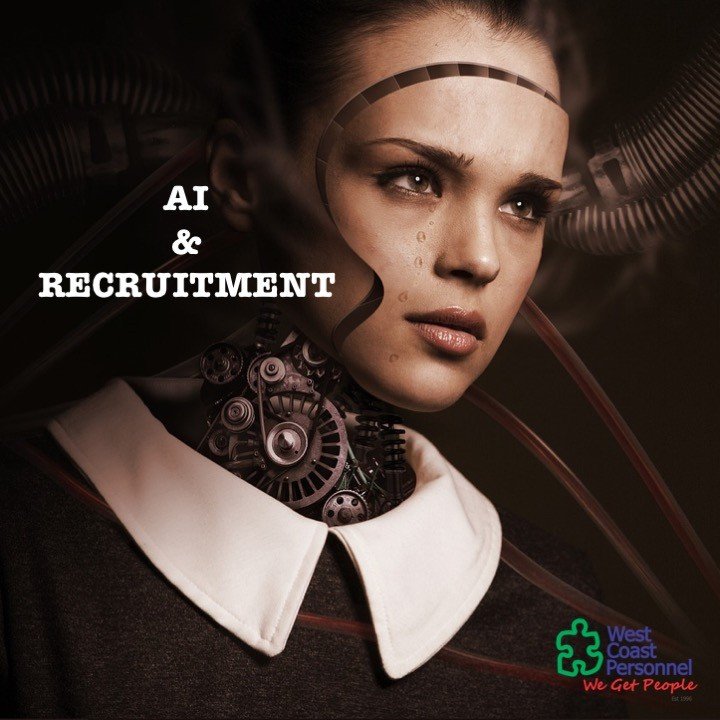
AI, Community Platforms and Tech Giants, these are hot topics currently alive in HR and Recruitment, but are we really understanding how the game will change once these products go to market? AI and recruitment, as a mix, are not far off from our future. I recently attended a IBM Conference where I got some first-hand insight on AI, and other interesting products already in the market. With a smart Development team, you could basically have a system that takes/ receives specs or even generated well developed specs for you and place adverts on all job boards, especially on social media. In addition, this new system can shortlist candidates, tests candidates, personality profile candidates, choose the best option, negotiate the terms of the contract and salary, get the contract signed, and learn all your staff’s functions by monitoring everything they type, say, watch and do. The core key AI that will apply, is to learn your function, spot weaknesses and train you, learn strengths and share them with peers and basically develop super HR staff and eventually do their jobs better than them. AI includes factors such as emotions and feelings. It will be faster and will process data faster than that of a human. IBM already has these products available and with a smart Development team. You can put together a highly intelligent and smooth functioning solution to make it your own. Microsoft has just made it clear why they were so determined to beat Salesforce in the battle to acquire LinkedIn. Microsoft’s partnership with LinkedIn will see them launching a similar and intriguing system to utilise skills, anywhere in the world, at any time. Developing products like their very powerful CRM, LinkedIn Data base, AI and bots, they seem to be putting together a game changer. Microsoft pretty much has access to a 500 million-strong workforce to tap into. Not only can you find the best person for the jobs, based on LinkedIn testimonials and more, you can order them for the job and add it to their schedule. HoloLens might just offer the solution with someone around with good enough skills to be guided through the job. LinkedIn + HoloLens = Microsoft being able to make that happen for you. Microsoft has a colourful history with chatbots. In 2016 it launched a chatbot that turned into a genocidal racist, and another year later they called Windows 10 “spyware”. They seem to be getting chatbot’s right and I am sure a lot of the communication of the future on social sites will be with chatbots. It has been speculated that the giant Tech companies have their eyes on the other big platforms. It is not just a HR/Recruitment Solution. These sites plugged into the correct CRM with the correct AI and chat bots can and more likely will change the consumer market as we know it. The race is on. If you think I am talking the future, you are mistaken. All the newly developed tech is already present and companies like Microsoft are putting the dots together. Are HR departments and staff at risk? Is the recruitment industry at risk? What do you think?
DISMISSALS – A FEW WAYS TO HANDLE

Let this be clear. This cannot not be used as a tactic to get rid of employees. With handling dismissals, there are procedures to follow and they need to be fair. There needs to be actual poor work performance, incompatibility or ill health, to be able to start the negotiations for employment at a lower salary, a more junior role in the organization or to dismiss them based on incapacity. The employer must ascertain whether the employee is capable of performing the work that he was employed to do, and if not the extent to which he is unable to perform those duties. The employee is entitled to participate in this investigation, which may require further medical investigation, and the employee can also be asked to demonstrate his ability. Dismissal based on incapacity due to ill-health, incompatibility or poor work performance, depends on the question whether the employee can fairly be expected to continue in the employment relationship. One must bear in mind the interests of the employee, the employer and the equities of the case dismissal based on incapacity due to poor work performance. This needs to be documented, and the employee needs to receive guidance in the form of appraisal and training, if need be. Other factors to be considered when handling possible dismissals would include the nature and cause of the incapacity, the likelihood of recovery and improvement or recurrence. The period of absence and its effect on the employer’s operations must also be considered as well as the effect of the employee’s disability on other employees. If the employee’s duties cannot be adapted in such a way that the employee is able to fulfil those duties, and no alternative position is available, then dismissal may be justified. If the employee is offered a lower position and reduction in salary, then the lower salary will apply. Thus, it is obvious that the principles of procedural fairness and substantive fairness applies to such dismissals, as it applies to all types of dismissals. Should the employee not accept alternative employment at a lower salary the following factors need to be considered: When deciding whether a dismissal for incapacity was fair or not, the following must be considered: · whether the employee failed to work to a required standard · whether the employee was aware of the standards · whether the employee was given a fair chance to meet up to the standards · whether dismissal is the right punishment for failing to meet the standards Handling dismissals based on poor performance will only be fair if the employer: · has given the employee proper training, instructions, evaluation, guidance and advice · assessed the employees performance over a reasonable period of time · investigated the reasons for continued poor performance · investigated ways of solving the problem without resorting to dismissal · gave the worker a chance to be heard before deciding to dismiss Handling dismissals for (temporary/permanent) ill health or disability will only be fair if the employer: · investigated the degree and duration of the injury or incapacity · considered ways of avoiding dismissal, for example getting a temporary worker until the sick employee has recovered · tried to find alternative work for the employee to do · tried to adapt the work so that the employee could still do it · gave the employee a chance to be heard before deciding to dismiss How severely ill or disabled the worker is (degree of incapacity) and for how long he or she is likely to remain ill or disabled (duration of incapacity), as well as the reason for the incapacity, will be considered when deciding whether the dismissal is fair or not. More effort is expected of the employer if the employee was injured or became ill because of their job. Handling dismissals is a sensitive process and because the law is tight, one should approach a specialist if you are not sure.